


 Quantum Quill Media (Official Site)
 Astrabionics (Official Site)
 Awards
Digital Agriculture Market Growth Drivers and Market Dynamics
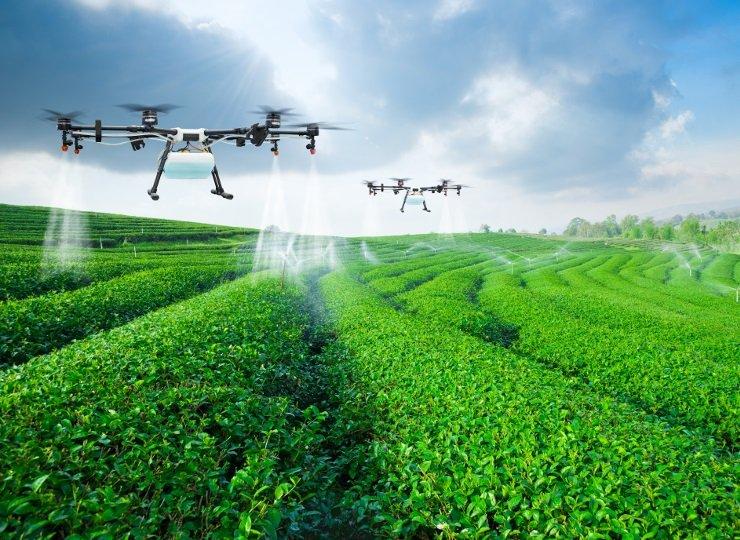
Understanding the factors driving expansion of digital agriculture adoption provides essential context for stakeholders evaluating investments and positioning strategies within the evolving agricultural technology ecosystem. The Digital Agriculture Market Growth is propelled by interconnected drivers spanning agricultural productivity imperatives, technology advancement, economic pressures, and environmental sustainability requirements. The fundamental recognition that global food production must increase significantly to feed growing populations without proportional expansion of agricultural land area represents the primary structural driver compelling technology adoption. Climate change impacts including weather variability, shifting growing conditions, and extreme event frequency create urgency for monitoring and adaptation technologies that enable resilient agricultural operations. The Digital Agriculture Market size is projected to grow USD 16.55 Billion by 2035, exhibiting a CAGR of 5.14% during the forecast period 2025-2035. Water scarcity in critical agricultural regions drives adoption of precision irrigation and water management technologies that optimize usage efficiency through sensor-based monitoring and automated application. Labor availability challenges particularly acute in developed agricultural economies are accelerating investment in automation and robotics that reduce dependence on increasingly scarce and expensive manual labor. The economic pressures facing farmers globally compel adoption of technologies reducing input costs while maintaining productivity through more efficient resource utilization. Input cost volatility for fertilizers, fuel, and crop protection products creates incentives for precision application technologies that minimize waste while optimizing effectiveness. Commodity market price volatility encourages any technological advantage that can improve profitability margins through enhanced productivity or reduced costs. The demonstrated success of early digital agriculture adopters in improving operational performance encourages broader adoption by followers observing peer results.
Technology advancement represents a fundamental growth driver enabling expanded practical applications and reduced adoption barriers for digital agriculture solutions. The maturation of enabling technologies including satellite remote sensing, drone platforms, and sensor networks has dramatically expanded monitoring capabilities while reducing costs. Artificial intelligence and machine learning development enables sophisticated analysis that transforms raw agricultural data into actionable insights and recommendations. Cloud computing infrastructure provides scalable data storage and processing capabilities accessible to agricultural operations of all sizes without substantial on-farm technology infrastructure investment. Mobile technology advancement enables farmer access to digital agriculture capabilities through smartphones and tablets appropriate for field environments. Connectivity expansion through rural broadband initiatives and satellite internet services extends digital agriculture access to previously underserved agricultural regions. Hardware cost reductions have made sensors, processors, and connectivity devices economically viable for widespread agricultural deployment. Software development approaches including cloud-native architecture and continuous deployment enable rapid platform improvement and feature addition. User experience design evolution has improved interface accessibility for farmers with varied technical backgrounds and limited time for system training. Integration technology advancement enables data exchange between systems from different vendors, reducing fragmentation and enhancing comprehensive farm information management. Edge computing development enables sophisticated real-time processing in field environments with variable connectivity. Autonomous equipment technology has advanced from research concepts toward commercial viability for appropriate agricultural applications. Battery and electric motor technology improvement enables practical electrification of agricultural equipment with operational advantages. Each technology advancement expands potential scope and value of digital agriculture solutions, driving continued market growth through enhanced capabilities and expanded farmer access.
Economic and business model drivers influence digital agriculture adoption through incentive structures, risk management opportunities, and value creation mechanisms. Subscription and service-based business models have lowered adoption barriers by eliminating large upfront capital requirements for technology access. These models enable farmers to pay for technology as operational expense rather than capital investment, aligning cost with value received. Return on investment demonstration has improved as vendors develop analytical capabilities showing economic impact of digital agriculture adoption on farm profitability. Benchmark data availability enables farmers to compare performance against peers and understand improvement opportunities through technology adoption. Input cost savings from precision application consistently demonstrate measurable economic returns justifying technology investment. Yield improvement opportunities identified through data analysis and optimized management practices create value exceeding technology costs. Risk management benefits from improved monitoring and prediction capabilities help farmers avoid costly problems through early intervention. Insurance premium reductions and claims processing advantages are emerging as digital farm data enables improved risk assessment and verification. Carbon credit opportunities are creating new revenue streams for farmers who can document sustainable practices through digital monitoring and verification systems. Supply chain requirements for traceability and sustainability documentation are creating market access advantages for digitally-enabled farms meeting buyer expectations. Premium market access through quality verification and differentiation supported by digital documentation enables value capture beyond commodity pricing. Financing advantages emerge as lenders incorporate digital farm data into credit assessment, potentially improving loan terms for data-sharing farmers. Government incentive programs in various jurisdictions provide subsidies, tax advantages, or cost-share arrangements supporting digital agriculture technology adoption. These economic drivers collectively create compelling business cases for digital agriculture investment.
Sustainability and regulatory drivers represent increasingly important factors accelerating digital agriculture market growth through environmental imperatives and compliance requirements. Environmental sustainability concerns are driving adoption of technologies that enable reduced input usage, lower emissions, and improved resource efficiency across agricultural operations. Consumer and market demand for sustainably produced agricultural products creates incentives for practices that can be documented through digital monitoring and verification. Regulatory requirements regarding nutrient management, water quality protection, and pesticide application are increasingly mandating record-keeping and management practices facilitated by digital agriculture platforms. Carbon market development is creating new economic opportunities for farmers who can document carbon sequestration and emissions reductions through precision agriculture practices. Government agricultural policies are incorporating digital agriculture promotion through subsidies, training programs, and technology access initiatives. Food safety traceability requirements are extending digital documentation requirements throughout agricultural supply chains from production through distribution. Environmental reporting obligations for agricultural operations are expanding in scope and frequency, creating demand for efficient digital data collection and reporting capabilities. Biodiversity and ecosystem service recognition is emerging as driver for monitoring technologies that document agricultural environmental stewardship. Water rights and usage documentation requirements are driving adoption of monitoring and management technologies in water-limited agricultural regions. Pesticide and fertilizer application record-keeping requirements are increasingly mandating precision and documentation capabilities provided by digital agriculture systems. Animal welfare documentation requirements are driving adoption of livestock monitoring technologies enabling compliance verification. The convergence of sustainability imperatives, market demands, and regulatory requirements is creating powerful drivers for digital agriculture adoption that extend beyond productivity optimization to encompass environmental responsibility and market access requirements. These drivers will continue intensifying as environmental concerns and regulatory frameworks evolve.
Top Trending Reports -
Italy Enterprise Metadata Management Market Size
Japan Enterprise Metadata Management Market Size
Spain Enterprise Metadata Management Market Size
 English
 Arabic
 French
 Spanish
 Portuguese
 Deutsch
 Turkish
 Dutch
Dutch
 Italiano
 Russian
 Romaian
 Portuguese (Brazil)
 Greek
Greek