


 Quantum Quill Media (Official Site)
 Astrabionics (Official Site)
 Awards
Kunliwelding Aluminum Welding Wire ER5087: How Does It Enhance Structural Integrity
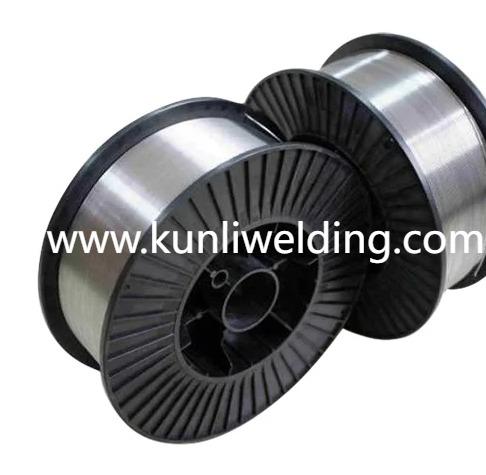
Aluminum Welding Wire ER5087 is a filler that many fabricators choose when a weld deposit must balance enhanced strength with controlled solidification behavior. The alloying approach in this filler raises the magnesium level and often includes grain-refining elements, a combination that changes how the molten metal freezes and how the resulting microstructure carries mechanical load. Those changes are the technical reasons behind measurable improvements in both strength and corrosion performance when the filler is correctly matched and processed.
How does the chemistry translate to strength? The increased magnesium content in the deposit increases solid-solution strengthening and contributes to higher yield and tensile properties compared with lower-magnesium fillers. In addition, the presence of a zirconium or similar grain refiner limits grain growth during cooling, which reduces the formation of coarse dendritic structures and narrows weak zones that can act as crack initiation sites. The net result is a more uniform microstructure across the fusion zone and heat-affected zone, which shows up as improved bending and tensile test results during qualification.
What about solidification cracking and deposit soundness? Welds that solidify with a more refined microstructure are less prone to centerline cracking because the grain boundaries are less continuous and less stress-concentrating during contraction. This is particularly valuable in thicker cross-sections and multi-pass welds where thermal gradients are steep and solidification stresses are larger. For assemblies that will undergo further forming or trimming, the refined deposit structure helps the weld better tolerate post-weld deformation.
Corrosion behavior is a practical concern in many service environments. A weld deposit that closely matches the electrochemical character of the base material reduces galvanic differentials that accelerate localized corrosion. The deposit chemistry produced by this filler maintains a balance between mechanical improvement and anodic compatibility when the base alloy family is in the same series. Proper post-weld finishing, protective coatings, and attention to joint design remain critical, but selecting the right filler reduces one variable in the overall corrosion management plan.
Process control amplifies the alloy benefits. Heat input, travel speed, and shielding gas composition affect dilution, cooling rate, and hydrogen pickup. Lower hydrogen levels and controlled heat input help the refined grain structure develop as intended and reduce porosity risk. In automated applications, consistent feed behavior and stable spool winding translate into steady arc characteristics and repeatable bead profiles, which in turn deliver the microstructure expected from lab trials.
How should teams validate expected improvements? Start with representative coupons welded using the intended parameters and joint geometries. Conduct macro or microsections to confirm grain structure and fusion profiles, run tensile and bend tests reflecting the assembly loads, and include a corrosion exposure check appropriate to the environment. If fatigue is a concern, a simple S-N screening on welded specimens will reveal whether the deposit performance aligns with service demands. These tests provide objective data to support a specification choice rather than relying on nominal grade names.
Practical workshop practices matter too. Proper storage to prevent moisture pickup, correct spool handling to avoid mechanical deformation, and matching feed-roll profiles to the spool hub type reduce feed interruptions that otherwise cause arc instability and inconsistent deposits. Site-level setup notes—recommended drive pressures, shield gas flow, and torch angle—should be part of any trial package so lab results can be reproduced on the production line.
Supplier transparency shortens qualification cycles. When a source provides lot traceability, certificates of composition, and sample spools on request, welding engineers can correlate any unexpected field behavior directly to a manufacturing lot. That traceability also streamlines root cause analysis if a production issue emerges. Clear documentation of upstream drawing, annealing, and spooling practices improves confidence that the spool in hand will behave like the spool tested.
For buyers who need practical support during qualification—sample spools, documented lot history, and setup recommendations—Kunliwelding supplies representative kits and clear lot records to aid lab and on-line trials. These resources help teams validate both mechanical and corrosion-related expectations before committing to a full production lot. Review product specifications and request sample spools at https://www.Kunliwelding.com/ .
 Portuguese
 English
 Arabic
 French
 Spanish
 Deutsch
 Turkish
 Dutch
Dutch
 Italiano
 Russian
 Romaian
 Portuguese (Brazil)
 Greek
Greek