


 Quantum Quill Media (Official Site)
 Astrabionics (Official Site)
 Awards
Buyer’s Guide: Choosing, Configuring, and Maintaining Your Compact Tracked Utility Terrain Vehicle Carrier
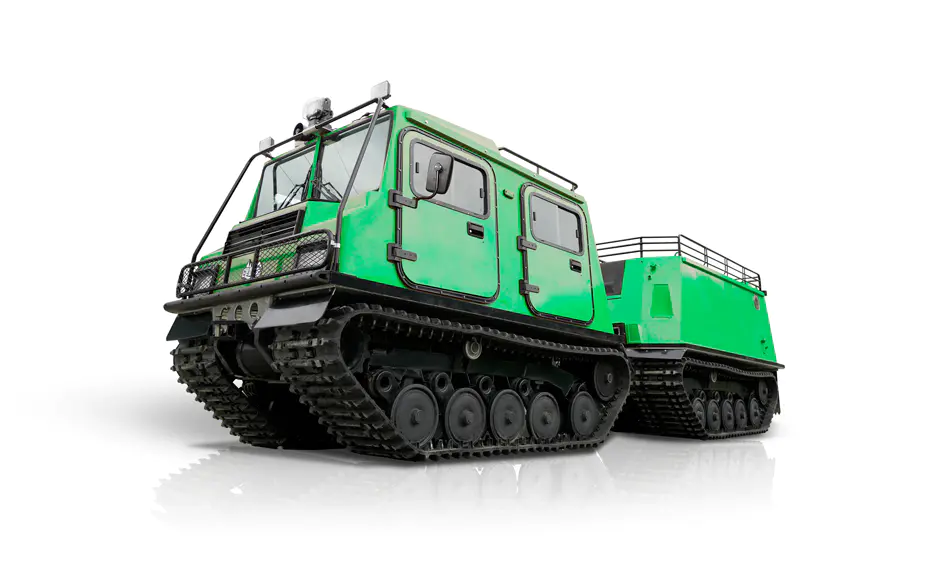
Shopping for a Compact Tracked Utility Terrain Vehicle Carrier can feel overwhelming; models range from bare-bones cargo sleds to climate-controlled crew cabins with LiDAR arrays. Start by defining mission scope. If you need to haul hay bales across soft pasture, a base-model Compact Tracked Utility Terrain Vehicle Carrier with mechanical steering and 22 hp will suffice. For search-and-rescue teams working avalanche zones, opt for the four-seat Compact Tracked Utility Terrain Vehicle Carrier XT variant that adds a 4 kW diesel heater, winch, and rear hydraulic lift.
Track width is the next critical decision. The standard 380 mm track on the Compact Tracked Utility Terrain Vehicle Carrier spreads load to about 2.8 psi, ideal for wetlands and golf courses. Upgrade to the 450 mm “flotation” track if your Compact Tracked Utility Terrain Vehicle Carrier will spend summers on peat bogs or winters on powder snow. Keep in mind that wider tracks increase turning radius; measure gate openings before ordering.
Attachment compatibility is where the Compact Tracked Utility Terrain Vehicle Carrier truly shines. A universal skid-steer plate bolts directly to the front, letting you swap between bucket, grapple, or snow blade in minutes. The rear PTO on the Compact Tracked Utility Terrain Vehicle Carrier outputs 28 hp for chipper-shredders or irrigation pumps. Before purchasing, request a demo day from your dealer; operating the Compact Tracked Utility Terrain Vehicle Carrier on your actual terrain is the only way to validate track choice and powertrain.
Maintenance schedules for the Compact Tracked Utility Terrain Vehicle Carrier are refreshingly simple. Change the 3.5 L synthetic oil every 250 hours—half the interval of competing UTVs—because the Compact Tracked Utility Terrain Vehicle Carrier’s dry-sump system filters continuously. Grease the 14 zerks on the track frame weekly; neglect here is the number-one cause of premature roller wear. Every 1,000 hours, pop the inspection covers and rotate the idler wheels to double service life.
Finally, consider telematics. The newest Compact Tracked Utility Terrain Vehicle Carrier models ship with an LTE gateway that logs GPS tracks, engine hours, and fault codes. Fleet managers can set geofences and receive alerts if a Compact Tracked Utility Terrain Vehicle Carrier leaves an approved zone or exceeds temperature thresholds. Over five years, the data collected from each Compact Tracked Utility Terrain Vehicle Carrier can reduce total cost of ownership by 18 %, proving that smart buying decisions today keep tomorrow’s workload light.
AI & Robotics Insights (QuantumSync)
Site Security
© 2026 QSync
 Italiano
Italiano
 English
 Arabic
 French
 Spanish
 Portuguese
 Deutsch
 Turkish
 Dutch
Dutch
 Russian
 Romaian
 Portuguese (Brazil)
 Greek
Greek